AI agents that plan, act, and stay accountable

Our agentic AI development services deploy agents and automations that reason through multi-step tasks, hand off across systems, and escalate to humans when judgment is required.


Agentic AI and workflow automation challenges we help you solve

1 Automate work that spans more than one system

One agent, many systems

Agents carry a process across CRM, ticketing, ERP, and internal tools, removing the manual handoffs between applications.

2 Handle exceptions without stopping the whole process

Judgment applied where it's needed

Cases outside an agent's rules or workflow automation parameters are routed to a human for decisioning, while the rest of the workflow keeps moving.

3 Know what an agent did and why

Every action is on the record

Each step an agent takes is logged with its inputs and reasoning, giving compliance and operations teams a complete audit trail.

4 Keep skilled people focused on higher-order tasks

Coordination handled, expertise reclaimed

Status checks, follow-ups, and cross-system data entry move to agents and automations through our agentic AI & workflow automation services, returning that time to work that calls for a person.

How we approach agentic AI and workflow automation

Autonomy with boundaries Autonomy with boundaries

Each agent and workflow operates inside defined permissions and escalation rules, making its authority explicit before it goes live.

Designed around the process Designed around the process

Work starts by mapping the actual workflow, including its exceptions, before any agentic AI architecture is chosen.

Auditable by default Auditable by default

Reasoning, inputs, and outcomes are recorded for every run, making agent behavior and automated steps reviewable by compliance, operations, and engineering alike.

Resilient across systems Resilient across systems

We engineer AI agents and workflow automations to handle timeouts, API failures, and partial data without corrupting the workflows they run.

The practices behind the outcomes

Workflow Discovery & AI Agent Design

Processes are mapped step by step, defining where AI agents act and where people decide.

Custom AI Agent Development

Agents are built to reason, plan, and complete multi-step tasks within defined limits.

Multi-System Agentic Orchestration

Agents are connected to CRM, ERP, ticketing, and internal systems to carry work across them.

Human-in-the-Loop Escalation Design

Escalation points, approval gates, and override paths are designed into every AI agent workflow.

Agent Governance & Audit Logging

Permissions, action logs, and reasoning traces are established so every AI agent action sequence and automated workflow is reviewable.

Agent Evaluation & Reliability Testing

AI agents are tested against edge cases and failure scenarios before handling live work.

Related Services

Explore these additional services from our AI & Gen AI capability pillar.

We design and engineer custom intelligent products and applications, transforming your requirements into rapid prototypes and production-ready software that combines advanced algorithms, robust architecture, and human-centered design.​

arrow-forward Explore AI/ML Development

We can help you apply the latest advancements in generative and predictive AI to deploy practical, production-grade solutions that automate complex tasks and unlock new capabilities across text, images, code, and data.​

arrow-forward Explore Gen AI

We facilitate the end-to-end process of building, deploying, monitoring, and maintaining machine learning models in production, bridging the gap between data science and IT operations to ensure your AI systems remain accurate, scalable, and compliant over time.​

arrow-forward Explore MLOps

Built to pivot without losing velocity

We understand that in a high-growth business, pivots are inevitable. We’re built to absorb the impact and keep you moving forward.
arrow-forward Partner with us

Our global AI engineering team builds for production

We’re not here to help you chase more pilots and PoCs. We're here to help you activate production-ready agentic AI use cases that improve your internal capability.

Case Studies

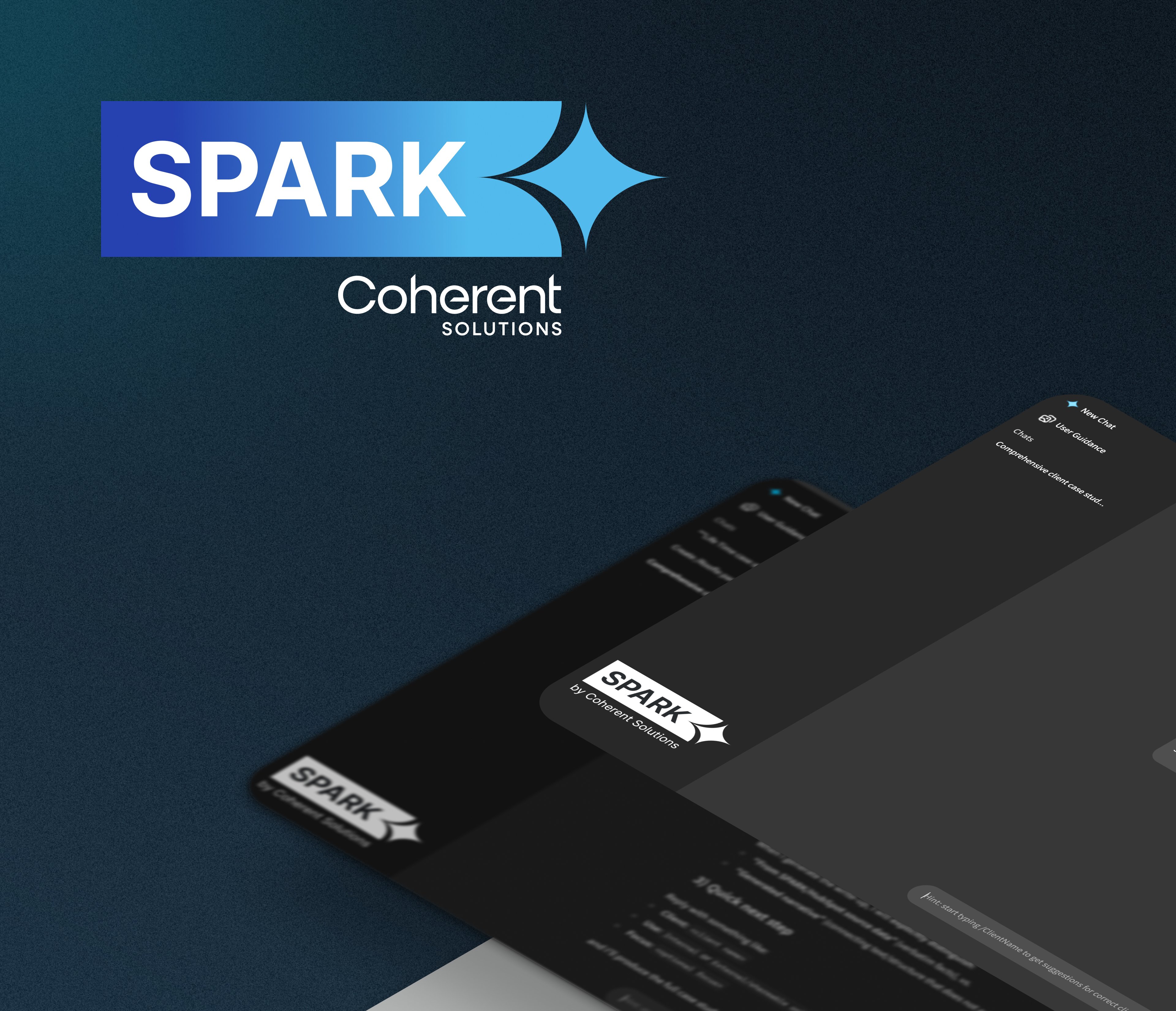
SPARK — Searchable Platform for Assets, Resources and Knowledge
Technology & SaaS

SPARK: Searchable Platform for Assets, Resources & Knowledge

How Coherent Solutions turned internal AI adoption into measurable enterprise value.
2,000
Global users
6+
Business functions enabled
1
Platform for generative response

Ready to embed AI agents into your workflows?

Connect with our global AI engineering team to get started.

Relevant
Questions

Scripts and RPA follow fixed paths and fail when conditions change. An agent interprets the goal, decides the next step based on what it observes, and adapts when a system responds unexpectedly. That flexibility is the value and also the reason guardrails matter more.

Match authority to reversibility and cost of error. Actions that are easy to undo and low-stakes can run without approval, while irreversible or high-value actions, like payments or customer communications, get a human checkpoint until the agent's track record justifies loosening it.


Scoped permissions limit what tools and data an agent can touch, escalation rules route unfamiliar cases to a person, and action-level policies block categories of operations outright. Defense in depth matters because no single control catches every edge case.

Run it against recorded historical cases in a sandbox with real system responses replayed, measure task completion and error rates, and deliberately inject failures and edge cases. Shadow mode, where the agent proposes actions a person confirms, is a common final stage.

Processes with high error cost and no reversibility, workflows where the rules change frequently without documentation, and tasks that depend on tacit judgment no one has written down. These tend to produce agents that either stall constantly or act confidently and wrong.

Against the pre-automation baseline on four measures: End-to-end cycle time for the process, the share of cases completed without human intervention, exception and error rates, and cost per completed task. Activity metrics like actions taken or hours saved say little on their own; the question is whether the process finishes faster, more reliably, and at lower cost.