

Fitness brands are expanding into new markets faster than ever, but expansion alone isn’t enough to build a market advantage. Consumer expectations are shaped by trends across industries, such as wellness, technology, entertainment, and lifestyle.
These influences blend together, creating connected digital ecosystems, and operators entering new regions must keep up to ensure members stay engaged. Fitness brands looking to grow sustainably should consider the following: physical scale creates reach, but digital maturity determines its value.
Consumers don’t separate their habits by interests, tasks, or needs — they expect continuity across all of these areas. For fitness brands expanding globally, the digital systems powering their customer experiences must keep pace with the evolving digital and physical environments their members already move through.
Balancing this digital and physical growth is where the tension begins. New markets reveal whether a company’s digital foundation can support its ambitions. When systems don’t align, expansion exposes strain, which can derail opportunity.
What global expansion reveals about your systems
The global fitness market will exceed $278 billion in 2025, with much of that growth coming from Europe, the Middle East, and Asia. For companies operating across borders, it’s important to remember that each region has its own digital requirements, tools, and expectations.
In the early stages, expansion feels promising. Without a plan to address changing digital needs, however, invoices and frustrations may begin to pile up. Adding tools and vendors that don’t talk to each other is costly and can create tech debt, which ultimately impacts system performance. When this occurs, expansion becomes an operational stress test.
A multi-location franchise that partnered with Coherent Solutions faced this problem head-on. Its digital operations spanned 5,000 clubs across multiple technology stacks. Each market had its own membership system, analytics, and vendor relationships. Bringing everything into a single architecture wasn’t quick, but the improvement was immediate — faster rollouts, improvement in member experience, and reliable reporting for the first time in years.
Thoughtful integration of existing technology can help create lasting value for companies looking to expand.
When growth hides the cracks
In addition to considering region-specific technology needs as they grow, companies must be aware of the digital issues that surface when momentum slows. When brands chase expansion opportunities before aligning digital architectures and systems, it can result in fragmentation — where data and processes are scattered.
In Coherent Solutions’ work with multi-region operators, the company has helped multiple clients navigate the impact of fragmentation. One brand, due to disconnected systems, maintained four different digital environments, each with its own member data and vendor stack. This inefficient setup absorbed resources and delayed expansion. Another organization paused its expansion plans entirely until it built a unified core. Both learned the same lesson: growth without digital planning turns into rework.
This is the “death by a thousand cuts” operators describe. When it comes to using disparate, disconnected systems, it’s not one dramatic failure that derails an organization — it’s small inefficiencies that compound over time. Everything may look fine when there’s active growth, but when growth flattens, the costs of fragmentation pop up like weeds.
Digital maturity begins when companies change how they see fragmentation. Fragmentation is not a side effect of successful growth, but a serious limitation.
The core capabilities of digital maturity
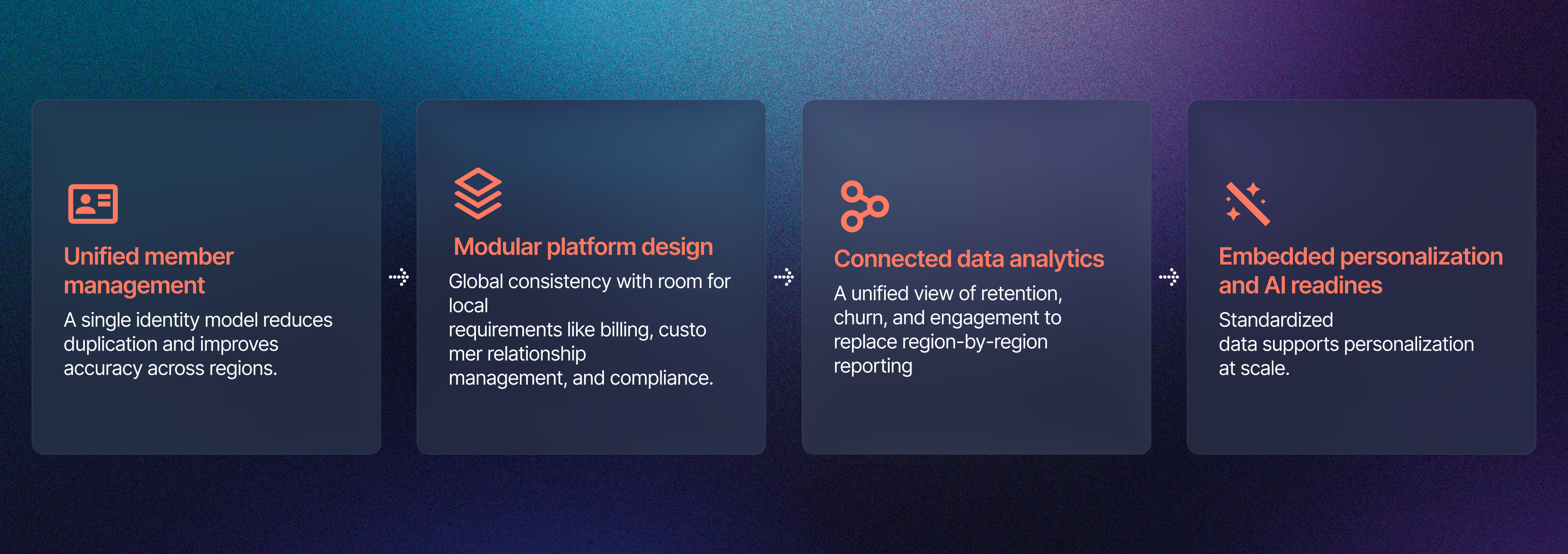
Digital maturity is the assessment of an organization’s ability to consistently create value through a unified digital foundation of systems, people, and processes. It reflects how well an organization designs and evolves its architecture to prevent fragmentation, support change, and enable long-term value creation across markets, services, and customer experiences.
In this way, digital maturity lets a business expand without rebuilding itself in every market.
How infrastructure shapes revenue and valuation
For decades, fitness clubs could depend on new members and new facilities to drive consistent revenue growth. That model no longer works. Today, revenue depends on multiple factors, including digital engagement.
Digital engagement — which often includes subscriptions, content access, and connected training — is now a primary path to recurring value. But none of it functions without a stable foundation.
In Coherent’s Future of Fitness whitepaper, the company observes that operators with strong digital platforms and diversified revenue streams tend to command higher valuations, while those reliant solely on memberships face increasing pressure in a consolidating market.
In another partnership, Coherent helped a leading fitness brand expand its mobile platform into a connected ecosystem that activated new revenue channels through personalized engagement and in-app services.
When considering and digital maturity, fitness brands should be careful not to confuse features with revenue. While offering features like subscriptions and connected training is great for business, ultimately, it’s in the supporting architecture that allows those features to scale. Coherent has helped fitness organizations modernize beyond membership-only experiences by building digital platforms designed to support multiple services and future growth. These systems treat monetization as infrastructure, not a marketing initiative. When a new product or partnership appears, it can plug into the same foundation without rewriting code or renegotiating every contract.
How regions and culture shape digital strategy
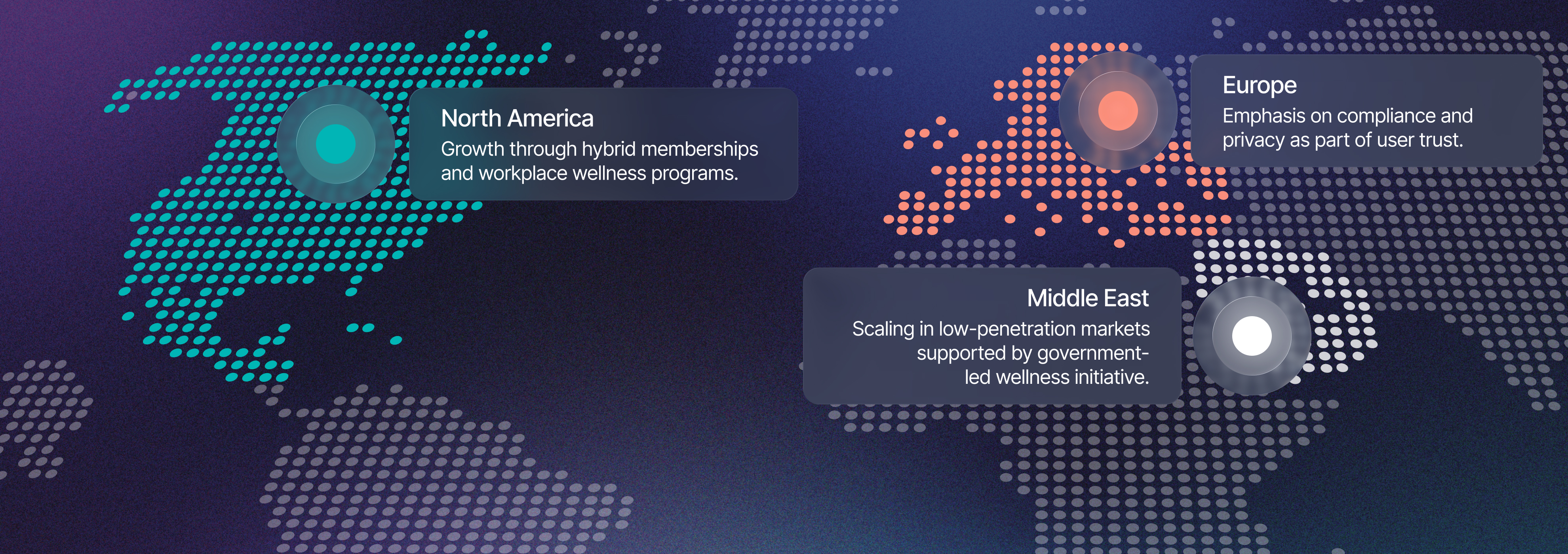
In addition to prioritizing architecture before features, organizations should consider the specific tools, technologies, and approaches they’ll need to support digital engagement in a particular region. Each region rewards a different expression of digital maturity, but all rely on shared architecture. Here are a few examples of what fitness brands may want to focus on if they’re looking to expand in three of the most popular regions:
While regional mechanics explain how platforms adapt, generational shifts can help companies understand why expectations are changing. Research from The Norm, Coherent’s digital experience agency, shows that Millennials and Gen Z — who account for more than 40 percent of global wellness spending — see fitness as part of their identity and community. They expect inclusivity, connection, and authenticity as much as convenience. These expectations span regions and create pressure for more cohesive digital experiences. In every market shaped by younger consumers, design should be a core part of the value proposition, as it can help build trust.
Fitness as a connected ecosystem
Fitness has become part of a broader network of health, habit, and identity. Digital ecosystems are business ecosystems and every interaction—on a device, in a club, or through a partnership—shapes loyalty and enterprise value.
This can look like offering virtual class passes for friends to take Pilates together, or manufacturers embedding sensors into wearable tech that syncs with fitness club machines.
As consumers interact with the digital ecosystem, it creates massive amounts of data that operators can leverage to create continuous feedback loops. This could look like using analytics to predict churn and personalize engagement or coaching, recovery, and nutrition data to provide personalized wellness plans.
Distinguishing the next generation of fitness leaders
In the rapidly changing fitness industry, the next generation of leaders will treat global expansion and digital development as a single strategy. For many companies, the strategy may include:
- Designing global platforms that adapt locally.
- Treating AI as part of infrastructure, not a feature.
- Building data continuity before their revenue depends on it.
The companies that lead the next decade won’t just enter new markets. They’ll build systems that connect those markets across borders to improve customer engagement. When fitness companies treat digital maturity as the new industry baseline, they can merge consumer wellness, lifestyle, and technology needs, building a brand that sets the pace in a competitive marketplace.
Digital expectations impact every part of life and the brands with unified ecosystems will be the ones that convert engagement into real business value.
SHARE ARTICLE


-1.jpg)